


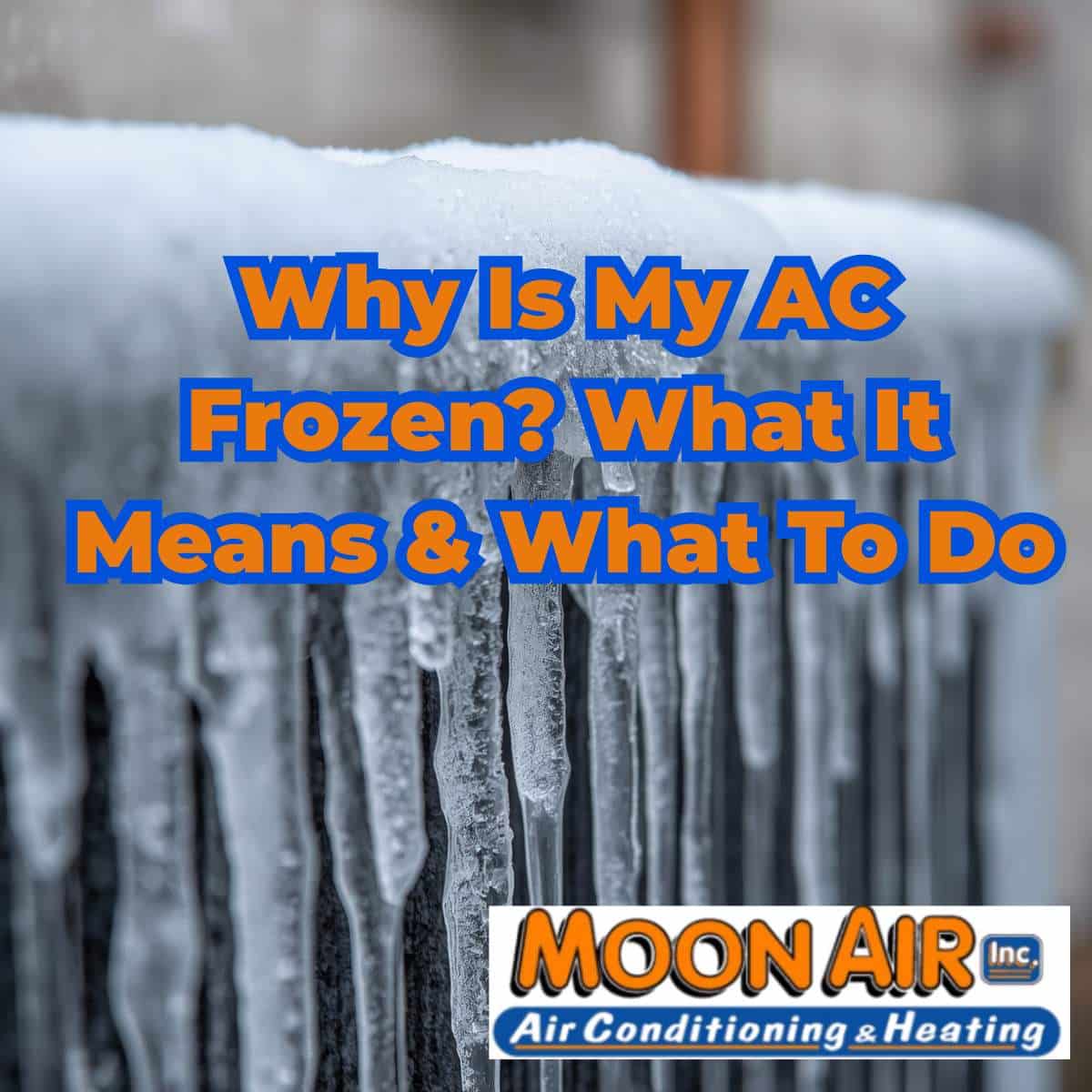
If you’ve pulled off a vent cover or opened up your outdoor unit this week and found ice, actual ice, on the coils or the copper lines, you’re not alone. Late July is when we see the highest volume of frozen AC calls all year across Elkton, North East, Newark, Middletown, and the surrounding areas.
It feels backwards: it’s 95 degrees outside, and your air conditioner is frozen solid.
Here’s the good news. A frozen AC is one of the most common summer breakdowns we see, and in most cases, it’s a repair, not a reason to replace the whole system.
Below, we’ll walk through why it happens, what to do the moment you notice it, and how we figure out what’s actually going on before we ever talk about next steps.
Why This Happens Most in Late July
Your AC has been running almost nonstop since early summer. In the Delmarva region, humidity keeps systems working overtime even after the temperature itself levels off, because the unit has to pull moisture out of the air on top of cooling it. By late July, components that were just barely getting by in June start to fail, and a frozen coil is often the first visible sign.
Ice forms when something is disrupting the normal flow of warm air across the evaporator coil, or when refrigerant levels have dropped. Either way, the coil gets too cold, moisture in the air freezes directly onto it, and the ice buildup makes the problem worse, which is why a small issue in the morning can turn into a solid block of ice by afternoon.
What to Do the Moment You Notice Ice
- Turn the system off entirely — not just off at the thermostat; switch off the AC at the breaker or the disconnect if you can. Continuing to run a frozen system can damage the compressor, which is a far more expensive repair than what’s likely causing the freeze.
- Turn the fan to “on” (not “auto”) at the thermostat, if your system allows it. This keeps air moving across the coil and helps it thaw faster.
- Let it thaw completely before doing anything else. This can take a few hours. Don’t try to chip or scrape the ice off — you can damage the coil fins.
- Check your air filter. A clogged filter is the single most common cause of airflow restriction that leads to freezing, and it’s the one thing you can check yourself in under a minute.
- Call for a diagnostic once it’s thawed, especially if this has happened more than once this season.
The Most Common Causes We Find
Restricted airflow. A dirty filter, closed or blocked vents, a failing blower motor, or ductwork issues all reduce the amount of warm air passing over the coil. Less airflow means the coil runs colder than it should — cold enough to freeze the condensation on its surface.
Low refrigerant. If your system has a slow leak, the refrigerant pressure drops, and low-pressure refrigerant runs colder than it’s designed to. This is one of the few causes on this list that isn’t a DIY fix and does require a licensed technician, both to locate the leak and to handle the refrigerant safely and legally.
A failing blower motor or fan. If the fan that pushes air across the coil is weak or not running at full speed, airflow drops even with a clean filter and open vents.
Thermostat or control board issues. Less common, but a system that’s cycling incorrectly can end up running the compressor without adequate airflow, leading to the same result.
How We Actually Diagnose a Frozen System
This is where we want to be upfront with you, because it’s a fair question to ask any contractor: how do you know whether this is a quick repair or the start of needing a whole new system?
We don’t guess, and we don’t lead with a replacement quote. Every diagnostic call starts the same way: we let the system thaw if needed, then test airflow, refrigerant pressure, and electrical components in that order, because that’s the order that tells us the real cause.
A restricted filter and a refrigerant leak look identical on the surface (ice on the coil), but they’re two completely different fixes with two completely different price tags. Skipping straight to “you need a new unit” without doing that testing is exactly the kind of shortcut that gives homeowners a bad experience and gives HVAC companies in general a bad reputation.
In most freeze-up cases, especially ones caught early, in a system that’s otherwise been well-maintained, the fix is a repair: a filter change, a coil cleaning, a capacitor or blower motor replacement, or sealing a small refrigerant leak.
Replacement only becomes the honest recommendation when the system is old enough that repeated repairs no longer make financial sense, or when the underlying damage (like a badly corroded coil) means a repair won’t hold.
When a Repair Isn’t Enough
To be transparent, there are cases where we’ll tell you plainly that repair isn’t the better option — usually when:
- The system is 12–15+ years old, and this isn’t the first major repair this year
- The refrigerant is an older type that’s expensive or difficult to source
- The coil itself is corroded through, rather than just low on refrigerant
- You’re facing a repair that costs more than a third of what a new system would run
Even then, that’s a conversation, not a sales pitch; we’ll walk you through the actual numbers so you can make the call.
If This Keeps Happening
A one-time freeze-up on an otherwise reliable system is usually a quick, inexpensive fix. A system that freezes repeatedly over the course of a summer is telling you something bigger is going on, and it’s worth getting a full diagnostic before the next heat wave rather than after.
Noticed ice on your system, or had it happen more than once this summer? Call Moon Air or book a diagnostic online. We’ll tell you exactly what we find. And exactly what we’d recommend if it were our own home.